Observations

Space Based Imaging

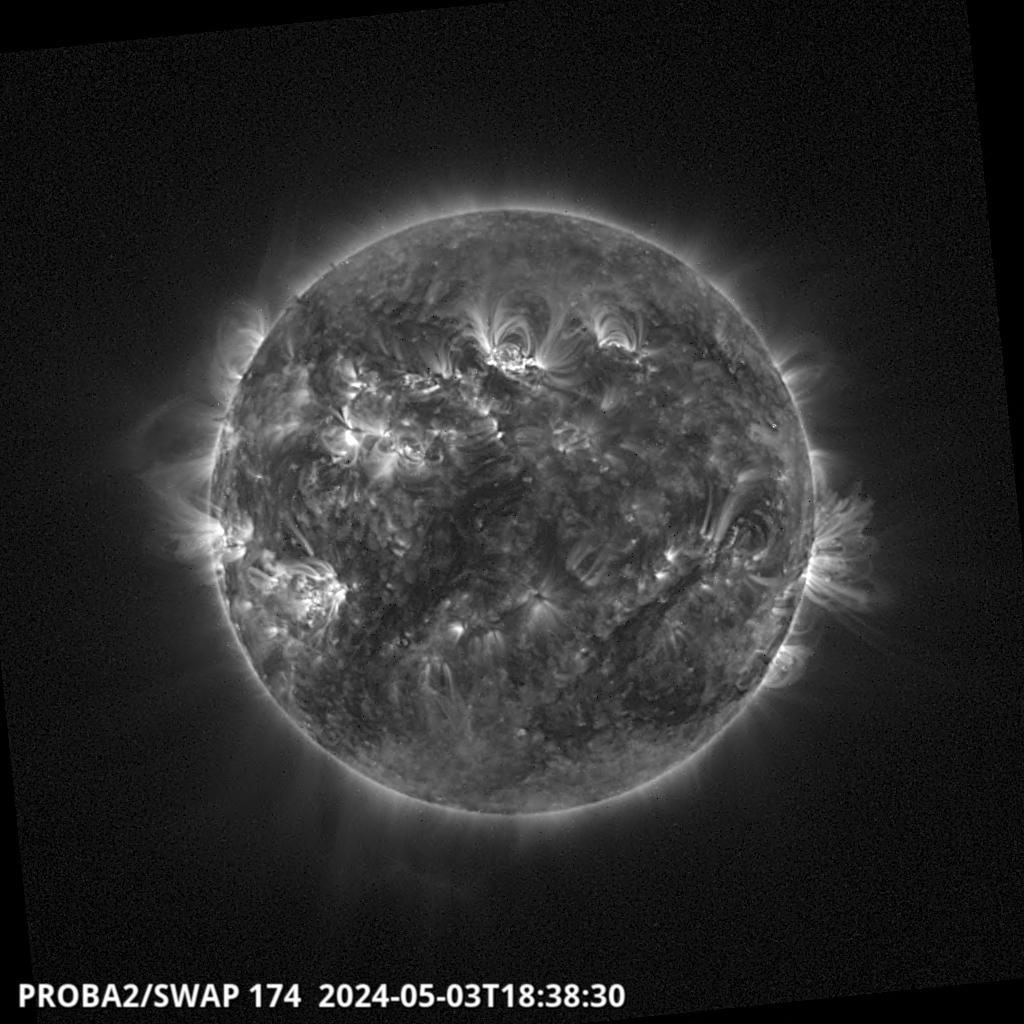
More data: SWAP, EUI

Ground Based Imaging

More: H-α, WL, Ca-IIK, Drawings

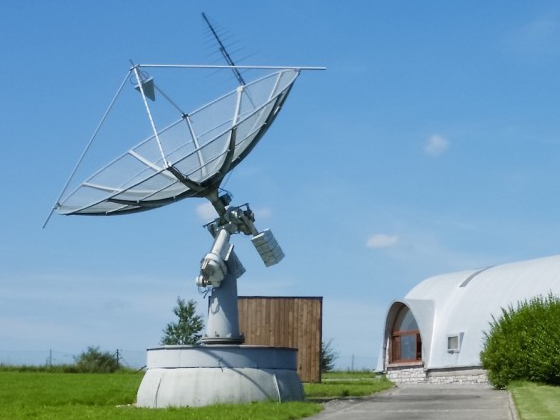
Ground Based Radio

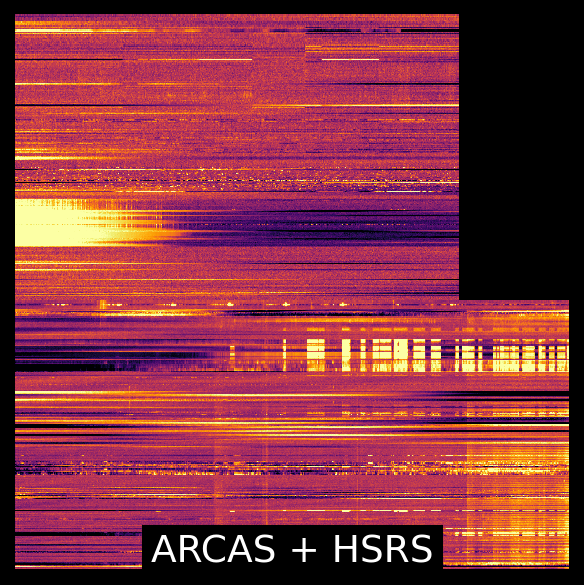
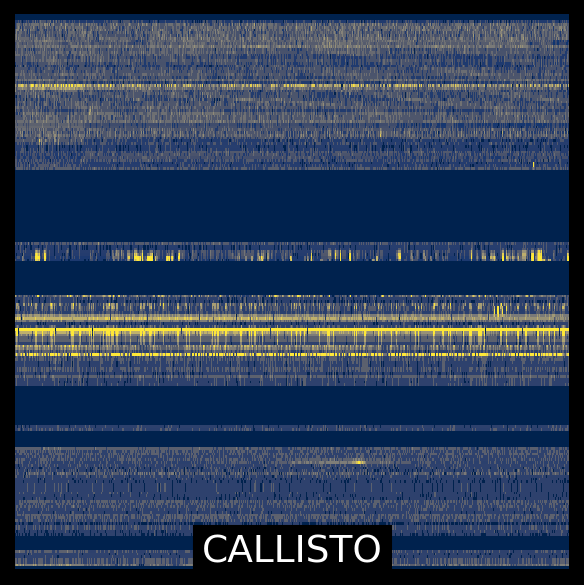
More: ARCAS+HSRS, CALLISTO

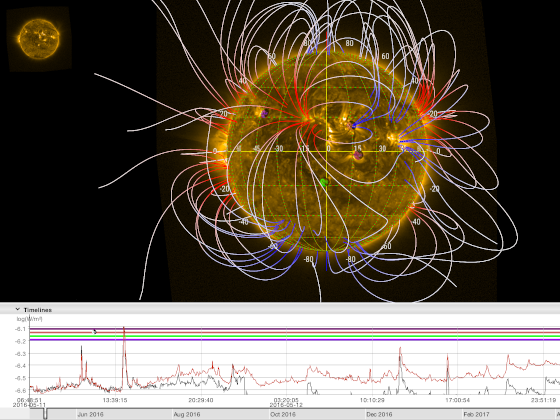
Space Based Timelines

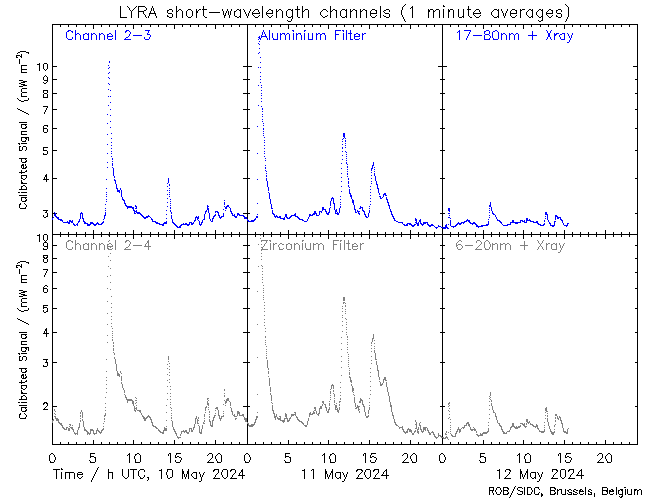
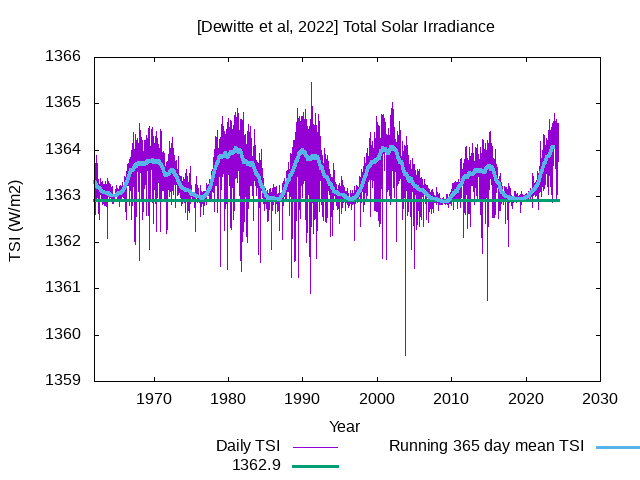
More data: LYRA, TSI

WDC Sunspot Index

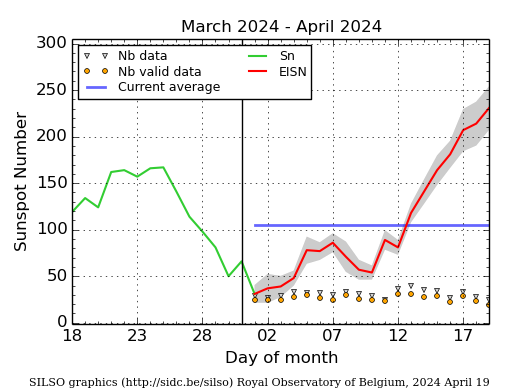
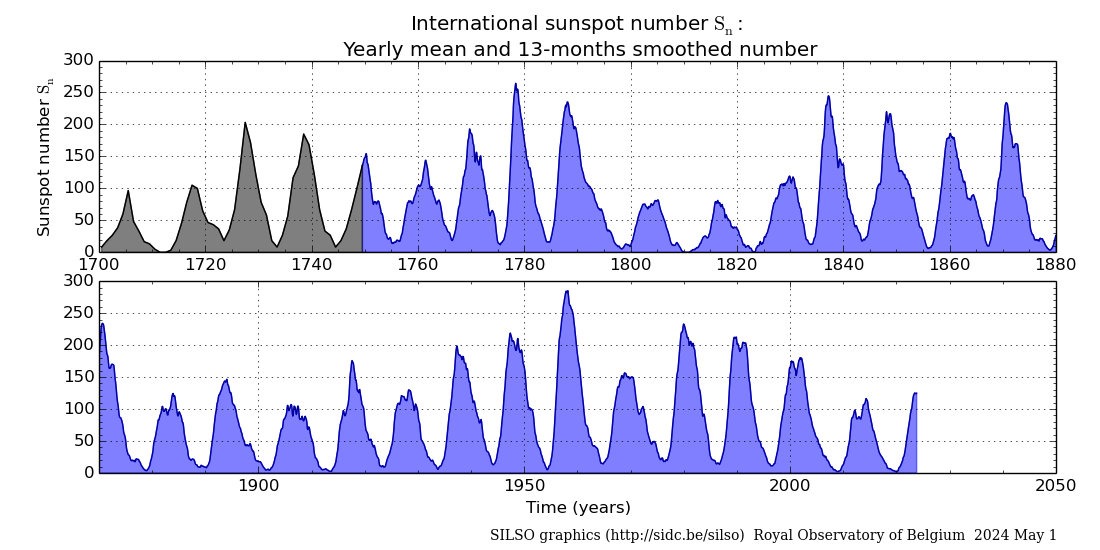
More data: SILSO

Space Weather Services

Detections

Solar Map

Latest Alerts

Presto 2026-05-11

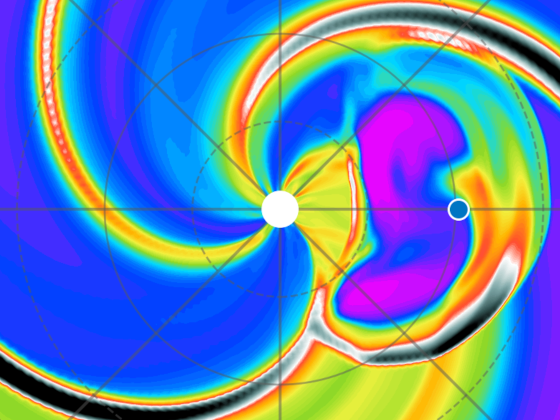
A partial halo Coronal Mass Ejection (CME) was observed in LASCO/C2 and C3 coronagraph imagery starting from around 13:48 UTC on May 10. The CME is associated with an M5.7 flare with peak time 13:39 UTC on May 10, from SIDC Sunspot Group 866 (NOAA Active Region 4436), located in the northeast quadrant. Preliminary analysis suggests that the bulk of the CME has a fitted speed around 1300 km/s. While the bulk of the ejecta appears to be directed eastward, a glancing blow may arrive at Earth starting from the early UTC hours on May 13. Further analysis is ongoing.

Flaremail 2026-05-10

A class M5.7 solar X-ray flare occurred on 2026/05/10 with peak time 13:39UT

CACTus Halo 2026-05-11

A halo or partial-halo CME was detected with the following characteristics: t0 | dt0| pa | da | v | dv | minv| maxv| 2026-05-10T13:48:23.558 | 3.0 | 24 | 162 | 614 | 176 | 218 | 844 t0: onset time, earliest indication of liftoff dt0: duration of liftoff (hours) pa: principal angle, counterclockwise from North (degrees) da: angular width of the CME (degrees), v: median velocity (km/s) dv: variation (1 sigma) of velocity over the width of the CME mindv: lowest velocity detected within the CME maxdv: highest velocity detected within the CME

Forecasts

  • Flare: M-class flares
    (≥50%)
  • Protons: Quiet
  • Geomagnetic: Active conditions
    (A>=20 or K=4)
  • All quiet: False
  • Provisional SSN:

Solar Activity

URSIgram 2026-05-12

Solar flaring activity was low over the past 24 hours, with only C-class flares. The strongest flare was a C1.8 flare (SIDC Flare 7676), peaking at 14:15 UTC on May 11, which was associated with SIDC Sunspot Group 860 (NOAA Active Region 4432, magnetic type beta-gamma). There are currently four numbered active regions on the solar disk. SIDC Sunspot Group 860 (NOAA Active Region 4432) is the most complex group. SIDC Sunspot Group 856 (NOAA Active Region 4431) has rotated over the west limb. The solar flaring activity is expected to be moderate over the next 24 hours, with M-class flares likely and a small chance for X-class flares. A narrow and slow Coronal Mass Ejection (SIDC CME 651) was observed in LASCO/C2 and C3 coronagraph imagery starting from around 22:00 UTC on May 11. The CME is likely associated with an eruption from SIDC Sunspot Group 825 (NOAA Active Region 4436), located in the northeast quadrant. While the bulk of the ejecta is expected to miss Earth, a glancing blow early on May 14 cannot be fully excluded. No other Earth-directed CMEs were observed in the available coronagraph imagery. The greater than 10 MeV proton flux was below the 10 pfu threshold level over the past 24 hours. It is expected to remain below the threshold level over the next 24 hours. The greater than 2 MeV electron flux measured by GOES 18 and GOES 19 was below the 1000 pfu threshold in the last 24 hours. The greater than 2 MeV electron flux is expected to be below the 1000 pfu threshold over the next 24 hours. The 24-hour electron fluence is presently at normal levels and is expected to remain so over the next 24 hours.

Solar Wind

URSIgram 2026-05-12

Geomagnetic conditions globally and locally were mostly at quiet levels (NOAA Kp 1 to 2, K BEL 1 to 2). Active to minor storm conditions may be possible over the next 24 hours, due to the possible arrival of a glancing blow associated with the Coronal Mass Ejection (SIDC CME 650) observed at 13:48 UTC on May 10, together with a possible high-speed stream influence from the mid-latitude positive polarity coronal hole (SIDC Coronal Hole 159). Over the past 24 hours, the solar wind parameters (ACE) reflected mostly slow solar wind conditions. Speed values ranged between 350 km/s and 410 km/s. The interplanetary magnetic field values were between 5 nT and 8 nT. The Bz component varied between -6 nT and 7 nT. The interplanetary magnetic field angle was mostly in the positive sector. Enhanced solar wind conditions may be possible over the next 24 hours due to the possible arrival of a glancing blow associated with the Coronal Mass Ejection (SIDC CME 650) observed at 13:48 UTC on May 10, together with a possible high-speed stream influence from the mid-latitude positive polarity coronal hole (SIDC Coronal Hole 159).

Research

News

M5SUVI195

The chronicles of NOAA 4436

Multi-vantage point observations, using combined imagery from multiple spacecraft and ground stations, shed light on some puzzling aspects of the evolution and flare activity of NOAA 4436.
Toolbag2008

What floats around, comes around

Currently, there are more than 30.000 tracked objects moving in a Low Earth Orbit. More than half are space debris and may pose a threat to the operational satellites and payloads.
X2AIA304

Double X-class flare

SIDC Sunspot Group 825 (NOAA Active Region 4419) was the source of 2 X-class flares produced on 24 April. The analysis of the associated CMEs is ongoing.
 

Activities

Ground Observations

The SIDC monitors the level of solar activity from the photosphere to the corona with ground based instruments located in Uccle and Humain.

Read more

Space Instruments

To avoid the disturbing or blocking effect of the Earth atmosphere, EUV observations of the solar corona need to be made from space...

Read more

Space Weather & Climate

We monitor and forecast solar variability to provide information services  to society and industry about the influence of space weather and climate.

Read more

Data Processing & Distribution

Data processing is necessary to extract relevant information for research studies, whereas data distribution and visualization are part of ROB open data policy.

Read more

Modeling

Modelling of Solar phenomena allows scientists to test theories and to predict Space Weather phenomena and their impact on Earth.

Read more


Supporting Research

The SIDC shares and expands its expertise through interaction with both upcoming and experienced researchers.

Read more